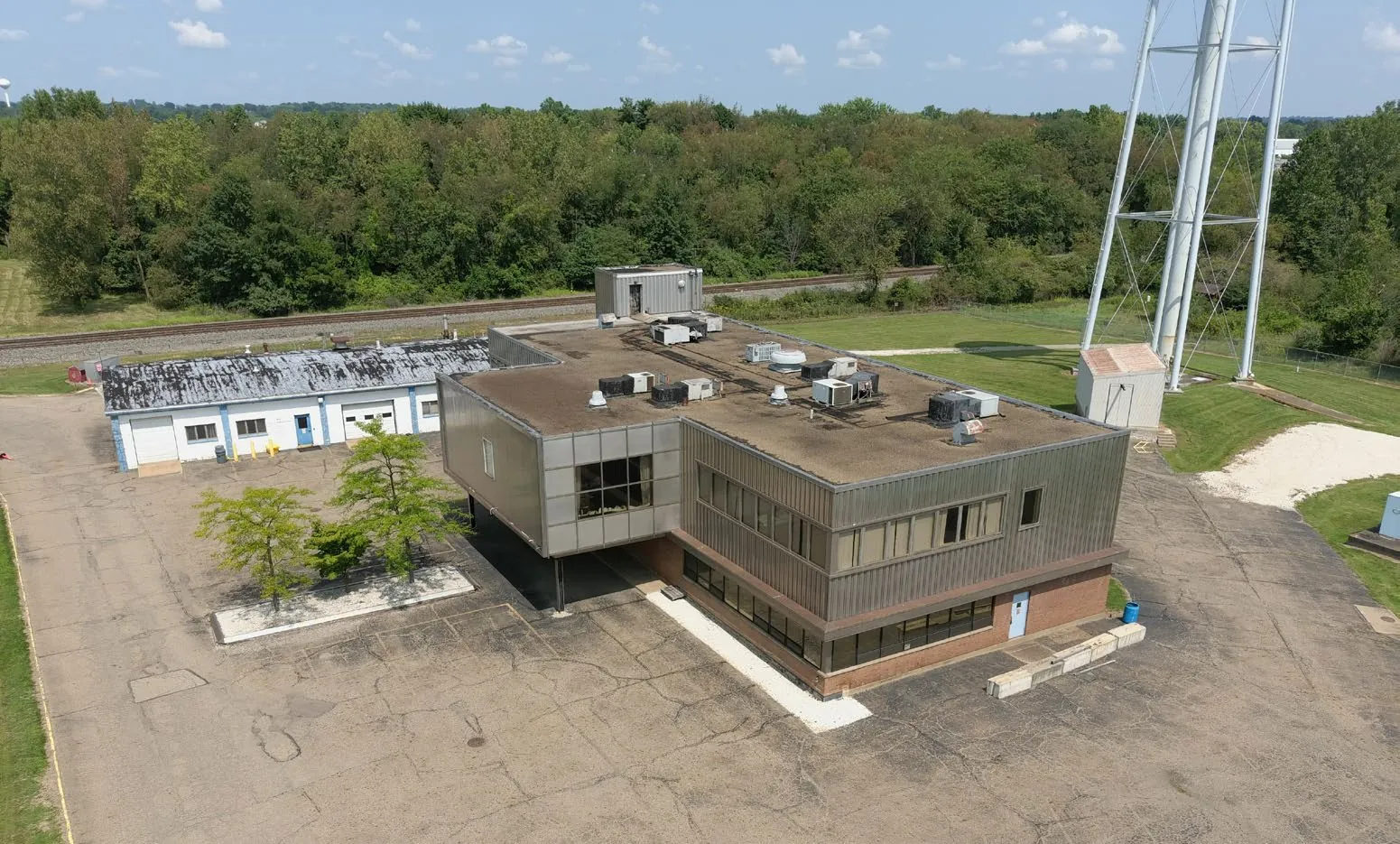
A working lab on a working mill.
The campus includes a GOES research center anchored by the site's standing metallurgical and magnetic test laboratory — development capability the U.S. industry lost when its last finishing lines closed. Research runs alongside production, on production equipment, with partners across the transformer supply chain.
Scribe geometry, stress patterns, and core-loss response — developed and proven on the line that ships product.
MgO and insulation coating chemistry for stacking-factor and interlaminar-resistance gains across the grade range.
Epstein and single-sheet testing in the standing met lab — certification for every coil, benchmarking for every trial.
Slitting and core-building trials with partners co-located on the campus — from master coil to finished core in one place.
Development capability America let lapse.
When the last U.S. finishing lines closed, the country lost more than tonnage — it lost the ability to develop grain-oriented steel: the metallurgists, the test benches, the measure-and-improve loop. The research center rebuilds that loop on the mill floor, so a gain proves out on the line that ships product rather than in a paper study.
Trials run on production equipment at production scale, so results carry straight into the steel we ship — no pilot-to-plant gap.
The standing met lab that certifies every coil runs the research measurements too — one source of truth for core loss and permeability.
Transformer builders and core makers join the loop early, tuning grade and geometry to the machine — not the catalogue.